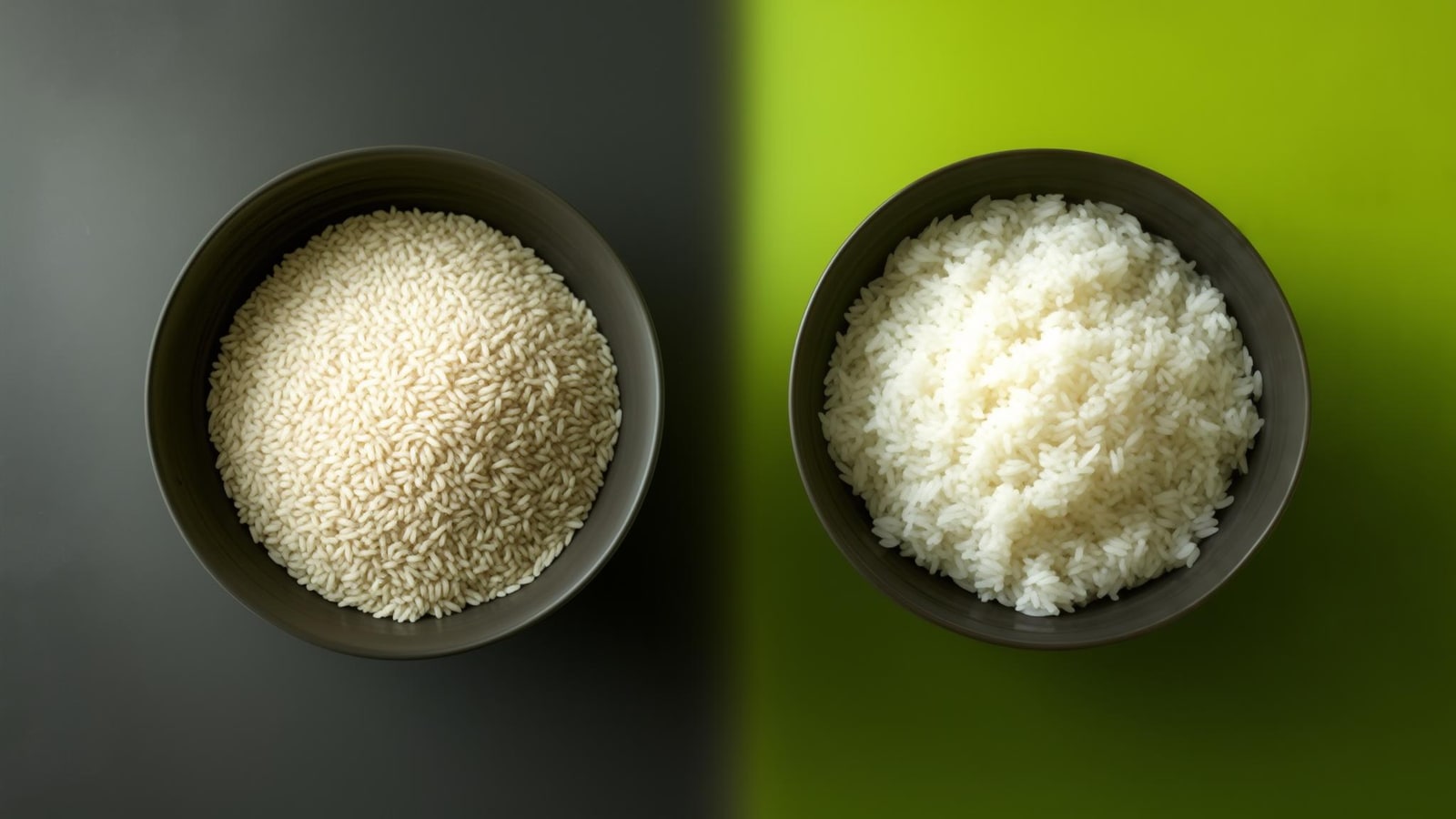
Match the record to the moment you weighed
The simplest rule is literal: if the number on the scale came from uncooked chicken, select an uncooked chicken record; if it came from cooked chicken, select the matching cooked preparation. The same applies to rice, pasta, beans, oats, meat, and vegetables. Record names matter because FoodData Central distinguishes food forms and preparation states. Logging a cooked weight against a dry or raw record combines two different bases and can create a large error even when the scale reading itself was sound.
Preparation words are not decoration. “Rice, brown, long-grain, cooked” describes a different state from dry brown rice. “Chicken breast, roasted” is not interchangeable with raw chicken breast or breaded fried chicken. Choose the closest food identity first, then enter the amount measured in that same state. If the database gives household portions, confirm whether a cup refers to cooked food. When a result looks surprising, inspect the record and unit before assuming the package, scale, or database is wrong.
Evidence for this section: USDA Agricultural Research Service
Understand why the weight changes
Cooking can remove water through evaporation and dripping, add water through boiling, or change fat through melting and absorption. USDA cooking-yield documentation describes these weight changes and uses yield factors when direct cooked composition data are unavailable. A piece of meat may weigh less after cooking because moisture and fat leave it. Dry grains and pasta usually weigh more after cooking because they absorb water. The nutrients did not appear or vanish in the same proportion as the scale weight.
This is why comparing calories per hundred grams across raw and cooked entries can be misleading without context. A cooked food that lost water often has more nutrients concentrated into each hundred grams, while a grain that absorbed water often has fewer calories per hundred grams than its dry form. Neither record is inherently more accurate. Accuracy comes from pairing the correct state with the measured amount and recognizing whether oil, sauce, breading, or another ingredient was added during preparation.
Evidence for this section: USDA Agricultural Research Service
Use recipe yield for batches
For a batch recipe, weigh or record each ingredient in the state used by the recipe, then weigh the finished edible batch after cooking. The finished weight becomes the yield. If the recipe totals 2,400 calories and the cooked batch weighs 1,600 grams, a 400-gram serving represents one quarter of the recipe. This approach automatically reflects the batch’s water loss or gain without requiring a universal raw-to-cooked conversion. The conversion belongs to that cooking session and recipe.
Record ingredients that enter during cooking, including oil, butter, broth, sauce, and toppings that remain in the finished dish. Exclude inedible packaging, bones, or liquid you deliberately discard when the recipe model supports doing so. Let hot food cool enough for safe handling before weighing, and follow food-safety guidance rather than leaving a batch at room temperature for precision. Save the recipe and yield once verified; future portions can use the cooked gram amount until the recipe or method materially changes.
Evidence for this section: USDA Agricultural Research Service · USDA FoodData Central
Avoid universal conversion shortcuts
Rules such as “cooked meat always loses twenty-five percent” or “rice always triples” are tempting because they remove work, but cooking method, time, temperature, cut, starting moisture, and draining all change yield. USDA tables report averages and sometimes ranges, which are useful when no direct measurement exists but cannot predict the result from a specific pan. If you routinely cook the same food, measure your own batch once or twice and use that observed yield as a practical default.
When someone else prepared the food, choose the cooked record and estimate the cooked portion you received. Do not reverse-engineer an exact raw weight from appearance unless the recipe or package gives that relationship. For packaged frozen food, follow the label basis: some labels describe the product as packaged, while preparation instructions may add ingredients. Read the serving statement and ingredient assumptions carefully. A conversion with visible uncertainty is better than a precise decimal produced by an unsupported ratio.
Evidence for this section: USDA Agricultural Research Service
Troubleshoot totals that look wrong
First check the unit: grams, ounces, cups, and servings can be confused. Next check raw versus cooked, edible portion, food identity, and preparation. Then look for added fats or liquids and confirm whether the database entry is per hundred grams or per listed portion. Compare against a second authoritative record only after those basics. A large mismatch often comes from the state or unit, not from subtle nutrient variation. Correct the cause instead of nudging the calorie total by hand.
Consistency makes the data more useful. Pick one repeatable method for each staple: perhaps dry weight for rice when building a recipe, cooked weight when serving leftovers, and cooked records for restaurant food. Document saved recipes clearly so you remember the basis. Tab can calculate from a selected food record and portion, but it cannot know whether the number you typed came from the pan before or after cooking. That small piece of context is what turns a scale reading into a defensible log.
Evidence for this section: USDA FoodData Central · USDA Agricultural Research Service
Important context
This article provides general information for adults and is not individualized medical, nutrition, or exercise advice. Talk with a qualified health professional about needs related to a health condition, pregnancy, medication, injury, or eating-disorder history.
Sources
- USDA Table of Cooking Yields for Meat and PoultryUSDA Agricultural Research Service · Accessed 2026-09-13
- Foundation Foods DocumentationUSDA FoodData Central · Accessed 2026-09-11
- About Us: FoodData CentralUSDA Agricultural Research Service · Accessed 2026-09-11
About these guides
Tab publishes conservative, evidence-led explanations for everyday food logging and fitness decisions. Estimates remain estimates, and individual needs vary.
Read our editorial standardsKeep reading
Related guides
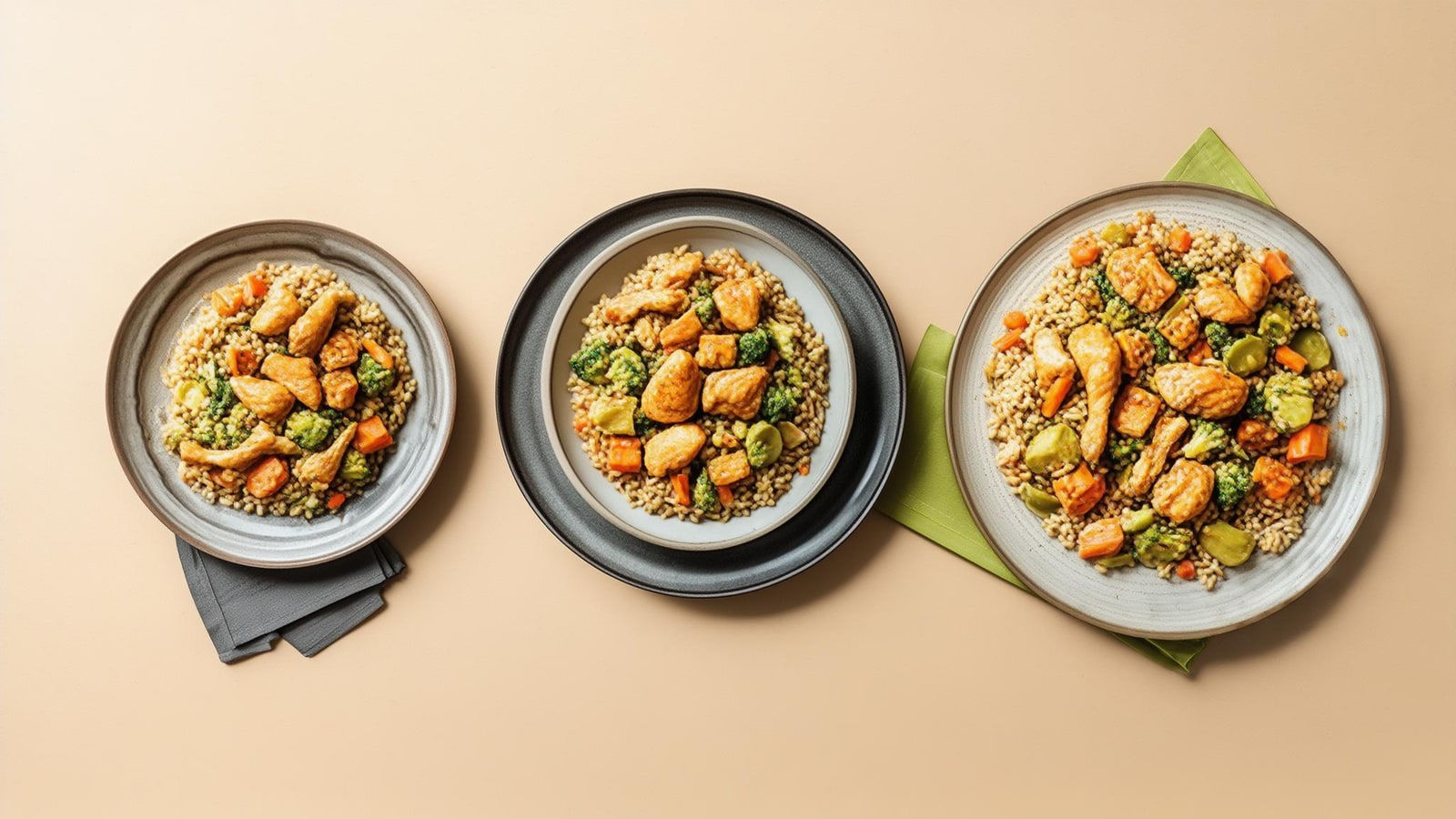
Food logging · 4 min read
How Portion Size Changes a Calorie Estimate
For a matched food record, nutrition changes in direct proportion to the edible gram weight. A 50 percent larger portion produces roughly 50 percent more of every nutrient in that record, which is why correcting the amount often matters more than chasing a different entry.
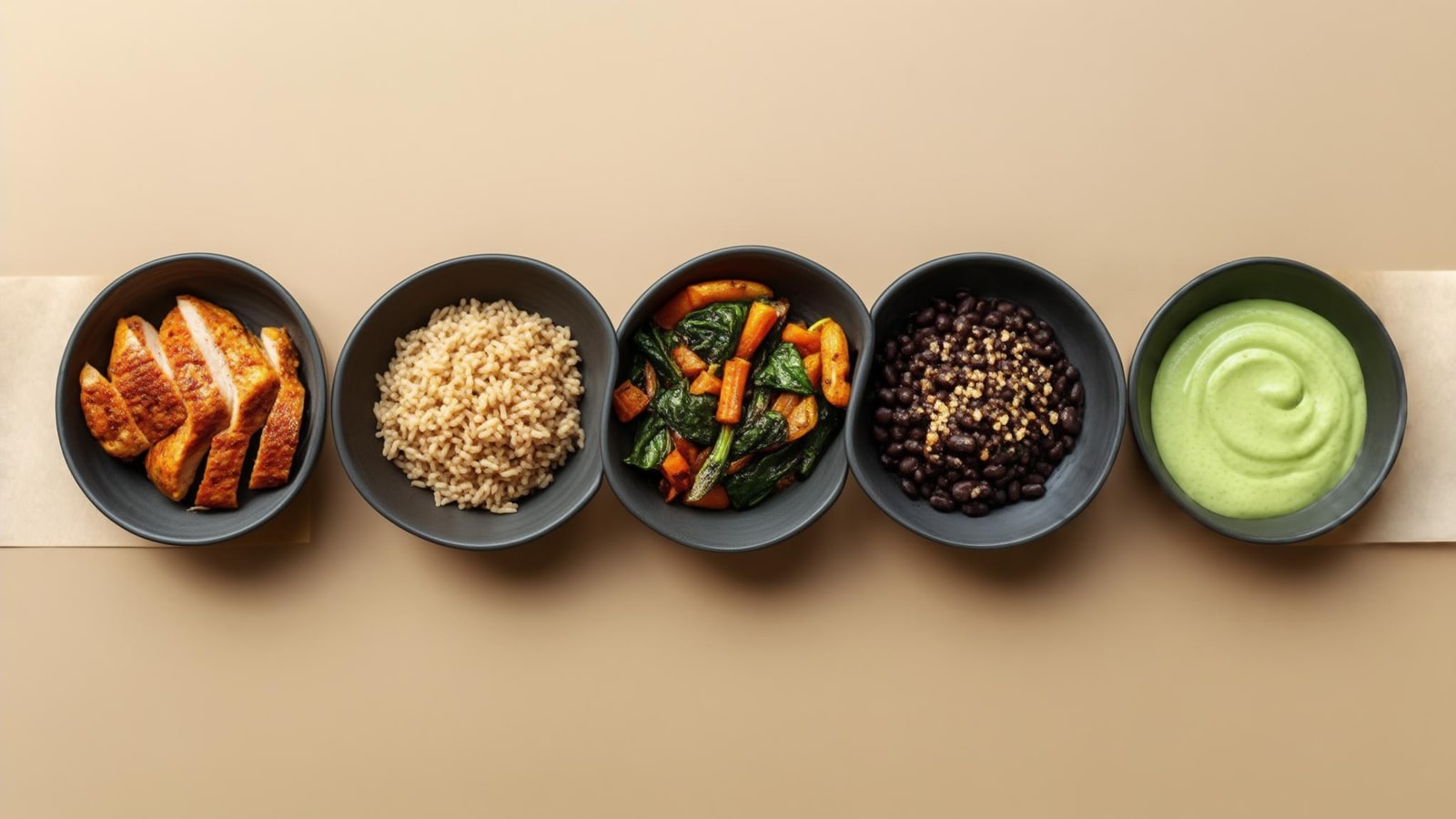
Habits · 4 min read
Meal Planning for Busy Weeks Without Eating the Same Thing Every Day
Plan components rather than seven finished dinners: prepare a few proteins, vegetables, and starches, then change sauces, formats, and textures. Add two true backup meals and leave intentional open space for leftovers, restaurants, or changed plans.

Food logging · 5 min read
How to Log Restaurant Meals Without Pretending the Estimate Is Exact
Start with nutrition published for the exact restaurant item when it exists. Otherwise estimate the major components, cooking fats, sauces, and drinks from the strongest evidence available, then accept a wider uncertainty range instead of forcing a precise-looking number.